
“Unlike the past, a directly elected Mayor is no longer a ceremonial figurehead. While a Mayor may not hold unchecked power, the claim that they have zero executive authority without council resolutions is simply untrue.”
As elections for City Mayors and Municipal Town Chairpersons in Andhra Pradesh shift from indirect council voting to direct elections by the public, a fierce debate has emerged across the state: What real powers do Mayors and Chairpersons actually hold? If these posts remain ceremonial figureheads as they were in the past, why invest so much public expense and political energy into direct elections?
Particularly in the context of A.B. Venkateswara Rao contesting for Mayor of Vijayawada, narratives are being actively promoted—even from sections within the ruling Telugu Desam Party (TDP)—claiming that a Mayor possesses no independent executive authority and cannot act without a formal Municipal Council resolution.
Is that claim true, or what is the actual institutional reality? Here is a breakdown of the facts.
The NITI Aayog Framework & Executive Authority
According to the official report and urban governance framework released by NITI Aayog on April 25, 2026, introducing direct mayoral elections for cities with populations exceeding 10 lakh (1 million) was adopted directly from NITI Aayog’s national recommendations. Crucially, NITI Aayog paired direct elections with a foundational structural reform: unlike an indirectly elected Mayor who previously held largely ceremonial powers, a directly elected Mayor must serve as the full-fledged Executive Head of the municipal corporation.
In a major departure from past practice, the Municipal Corporation Commissioner (an IAS officer) is mandated to work under the direct supervision of—and report directly to—the elected Mayor. Without waiting for routine state government clearances on day-to-day civic administration, the Mayor is empowered to make executive decisions across six core civic sectors.
The 'Mayor-in-Council' Cabinet & 6 Core Civic Sectors
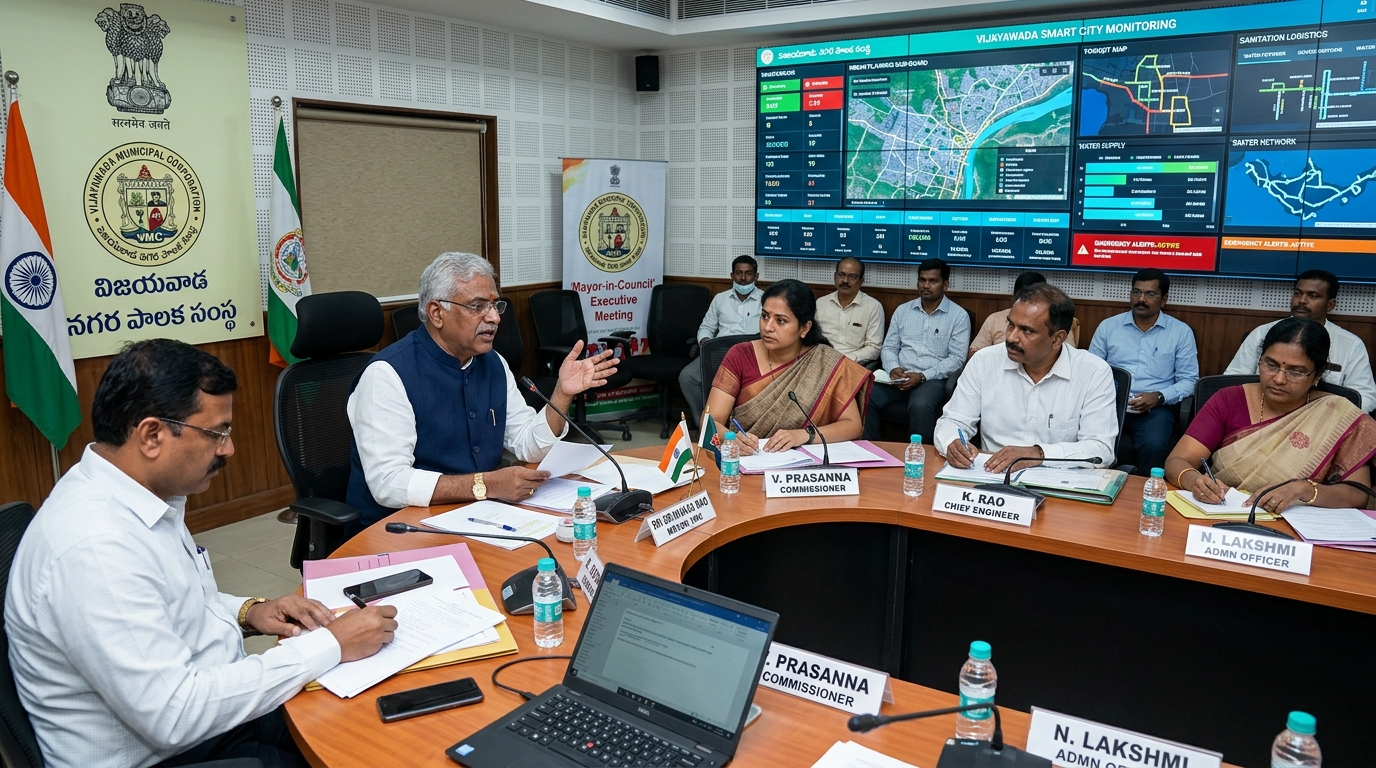
Within 15 days of assuming office, the directly elected Mayor is empowered to select members from among the elected corporators to constitute a 'Mayor-in-Council'—an executive municipal cabinet. The Mayor and the Mayor-in-Council exercise direct managerial control and decision-making authority over six core civic departments:
Beyond direct administrative control over these six civic line departments, the Mayor holds full statutory authority to requisition financial accounts at any time, audit how municipal budgets are spent, and expose financial irregularities or leakages.
Conclusion: Far More Than a Ceremonial Figurehead
In short, the office of the Mayor under the direct-election framework is no longer a ceremonial figurehead. While a Mayor may not wield unlimited power, the narrative that a directly elected Mayor has zero authority or is helpless without council approval is simply not true.
Verified Sources & References
- NITI Aayog Urban Governance & Direct Mayoral Election Framework (April 2026) (NITI Aayog / Municipal Administration Policy Brief)Verify